Categories
Auto racing Drivers Formula 1 Honda Indy Racing IndyCar

Remembering Alex Zanardi

I first met Alex Zanardi on a shuttle bus in California in 2000. We, along with a group of other media people, racing drivers and race team staffers, were on our way to a Honda media event during a pre-season showcase of what was then the CART (Championship Auto Racing Teams, a precursor to IndyCar) series. At the time, the CART series was at the peak of its popularity. Zanardi had already won the CART championship twice, moved on to Formula 1 and was back in the American open-wheel racing series looking to try again with a new team.

I hadn’t planned to interview him and we’d never met before. But, since I ended sitting next to him on the ride and knew his reputation for being a funny, charismatic guy, I took the chance to throw a few questions his way.

In our short conversation he lived up to that reputation. He answered all my questions, went off on a few tangents and took a couple of good-natured jabs at some of his competitors.

It was about a year after that return to racing Indycars when he was involved in the horrific crash at a race in Germany in which he lost both legs and very nearly died.

Seemingly because he just couldn’t slow down, Zanardi eventually got behind the wheel again, driving race cars that had been modified with hand controls. And he became a hugely successful competitive Paralympian cyclist–winning four gold medals and two silver medals at the 2012 and 2016 Paralympic games, in the process becoming one of Italy’s most successful Paralympian athletes and a national hero.

Then, yet another accident halted all that. He was struck by a truck while on his hand bike during a training run in 2020. His family asked for privacy and kept largely silent about his condition while it was reported he responded well to multiple surgeries but was in the midst of a long period of rehabilitation.

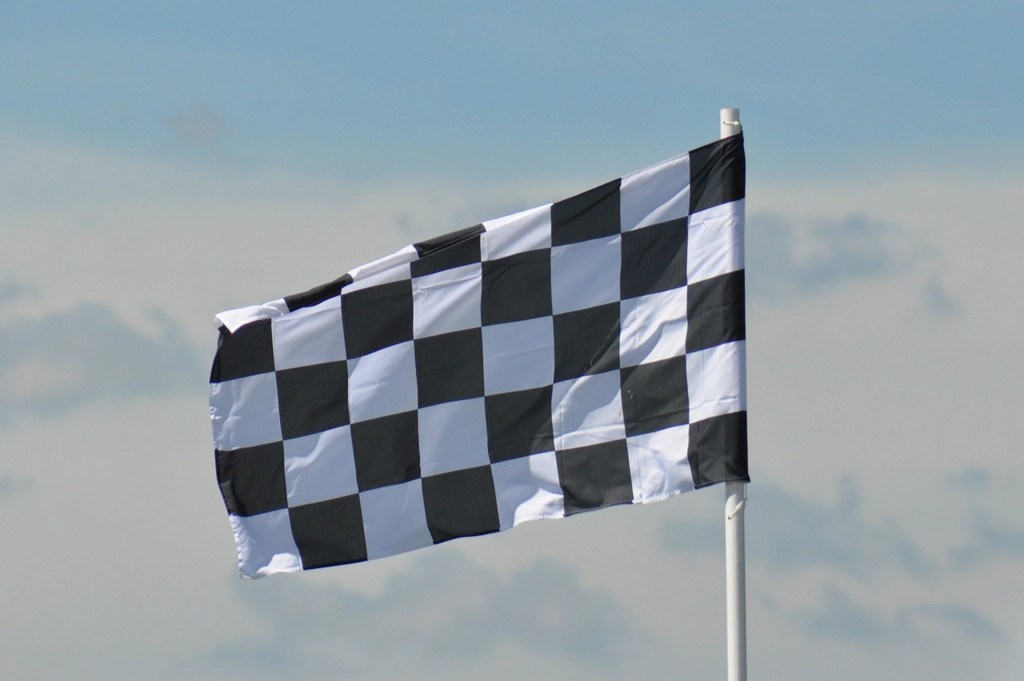
But what I remember the most about him took place about a year or so after that crash in Germany. He came to the Toronto Indy to wave the green flag to start the race, remarkable in itself given what he’d been through. I remember watching from the bleachers along the pit straightaway as he approached the flag stand, using crutches to aid with his prosthetics. He paused to wave to the crowd. We all assumed he’d wave the flag from track level because it would be too hard for him to climb the ladder up to the flag stand.

We were wrong.

He got to the stand, handed off his crutches and climbed, hand over hand, up the ladder. It took a beat or two before the crowd realized what he was doing. Many of us looked at each other as if to say “is he really doing that?” The cheering got louder as he grasped each rung and then we were all on our feet applauding as he reached the top.

That was my first thought when I found out he had died, at the age of 59. He was a relentless competitor and a case study in resilience.

His family announced his death on May 1.

Categories
Auto racing Indy Racing IndyCar NASCAR

IndyCars set to return to Mosport

As Will Power was busy winning the IndyCar Championship last weekend, Canadian race fans were revved up to hear that Indy racers will make their return to Mosport in 2015.

According to a few sources (ESPN’s Robin Miller, the Toronto Sun’s Dean McNulty and The Toronto Star’s Norris McDonald among them) the race’s move from the streets in and around Exhibition Place to Mosport is necessitated by the 2015 PanAm Games, which will take place in Toronto next year.

The Toronto Indy race has had its ups and downs, but it’s an event that still draws the crowds and it’s one many people, myself included, look forward to. Still, a return to Mosport, with its hills, off camber turns and the legendary Andretti straightaway, would feel like a welcome throwback to the heyday of IndyCar.

Indy racers first took to the Mosport track in 1967 in twin races both won by Bobby Unser. It was an era when the track also hosted the Formula 1 Grand Prix of Canada (among a raft of other events). After a nine-year absence IndyCars returned in 1977 with A.J. Foyt taking the checkered flag. The next year Danny Ongais won. The F1 race moved on to the Il Notre Dame/Circuit Gilles Villeneuve after the 1977 event.

Ron Fellows – often referred to as a road-racing ace for his role as a NASCAR ringer and his multiple race wins – is now co-owner of Mosport and was instrumental in its overhaul and renaming to Canadian Tire Motorsport Park, is obviously pleased that Power, Helio Castroneves and Juan-Pablo Montoya could be turning laps around his track.

“It’s exciting. How could it not be? We weren’t surprised when (Savoree-Green, the promoters) approached us. I’d say ‘flattered’ would better describe it. They are very good at what they do. The motorsport community is very small and we’re all in the same business, and if there’s anything we can do to help them we will. It’s important to keep an IndyCar event in Canada,” he told the Star. (Honda Indy and CTMP also released a similar joint statement.)

Couldn’t agree more, Ron. IndyCar, time to wave the green flag on Mosport.

Categories
Auto racing Formula 1 IndyCar NASCAR

Women in the driver’s seat

Watching the men’s and women’s Olympic hockey games over the past few days made me think about car racing.

Hold on, stay with me. The women’s gold medal game was a fantastic nail-biter. Part amazing comeback by the Canadian women (after being down 3-0 in the third period) and part epic collapse by the U.S. women’s team.

Then the Team Canada men beat the U.S. 1-0. Good result for Canada but a bit of a boring game by comparison. (Then, speaking of an epic collapse, the U.S. team lost 5-0 to Finland on Saturday in the bronze medal game.)

But, when the Olympics are over, the Canadian men will go back to the NHL and resume their careers. The women will remain hockey players but won’t play in the NHL. But why can’t they? It’s not the Men’s National Hockey League, after all. And, one of the best aspects of the Olympic games has been the speed and the playmaking. No fighting, no unnecessary stops in play. Maybe that would continue if women and men played on the same teams.

There are few sports where men and women compete on an equal footing but auto racing is one of them, although the sport could benefit from more female racers at the sport’s top levels. It’s partly because in racing success depends in nearly equal parts on athlete and machine. The physical differences between the genders don’t matter as much as they might in hockey or other full-contact sports. But, if professional hockey evolves to become more about speed and skill those differences might not matter.

My guess is that as more girls take up hockey, they’ll eventually begin knocking on the NHL‘s door. And if they’re as good as Team Canada’s women’s team has been in Sochi, it’ll be tough to keep them out.

Categories
Auto racing Driving Indy Racing IndyCar

Fast Talker: Canadian IndyCar racer James Hinchcliffe

Here’s my story on James Hinchcliffe, which was published in the summer 2013 issue of CAA Magazine. I  interviewed Hinchcliffe at his parents’  house in Oakville, Ont.  His mom and dad were there for part of the interview and offered their own take on his racing career. He’s a good interview — smart, candid and, as most race fans know by now, funny. The interview was conducted before the start of the 2013 IndyCar season and one of the things we talked about was his focus on getting his first IndyCar win. Luckily for both of us, that happened at the first race of the season in St. Petersburg, Fla.. I rewrote a section of the story just before deadline and he, of course, enjoyed a higher profile in IndyCar and in Canadian sports. He’s since added two more wins this season, at Brazil and Iowa.


Categories
Auto racing Formula 1 IndyCar NASCAR Touring Cars

Jacques Villeneuve: A Man for All Seasons

My interview with Jacques Villeneuve: former F1 world champion, CART champ and Indianapolis 500 winner.

Villeneuve interview (pdf)