Categories
Branding Cars Driving

Giddy up. My new dream car is a truck

I’ve decided I want a Ford Bronco. Not the bloated monster-truck style Bronco or even the bouncy Bronco II, but the square Bronco from the mid-seventies. The one with the small tires and wheels that made it look like it was hiking up its pant legs to wade across a creek. It’s the simple design and square, rugged lines that appeal to me, and to others like newsman Chris Gailus, who, with his Bronco, was the subject of the “My Car” feature in Friday’s Globe Drive. A 1976 Bronco was even featured in the auctions section of last month’s Automobile, where a nicely restored one sold for US$37,000. And it’s also the choice of some hipsters, particularly those with a taste for classic American style and design.

I think what we all like about the Bronco are its clean lines and overall simplicity, because let’s face it, simplicity is not often found in new cars. To me, it’s a classic that’s not a classic of my father’s generation but of mine. And, like the new Range Rover Evoque, it’s a cool truck that can also be considered a really cool car.

While I still want a Porsche 911, if someone were to appear at my door and offer me a choice of a new 911 or an old Bronco, I’d take the Porsche. Then I’d sell it and buy a slightly older Porsche. Then I’d take what’s left over and buy a Bronco.

Categories
Auto racing Cars Driving Safety

Globe Drive story on La Carrera Panamericana

7 days, 100 cars, 3,000 km, one crazy race

Most people travel to Mexico to soak up the sun and enjoy some fruity umbrella drinks at an all-inclusive resort. A few others, though, come for the treacherous roads, day after day of high-speed driving followed by intense fatigue and, sometimes, the odd broken bone. And, if they’re really lucky, a trophy and a cold beer when it’s all over.

Those are the people who take part in races like Mexico’s La Carrera Panamericana, which during its heyday from 1950 to 1954, was a five-day, 2,000-mile race on public highways that was considered one of the most difficult and dangerous auto races in the world – right up there with the Mille Miglia and Le Mans.

It was intended as a way for the Mexican government to promote the completion of the Pan American highway, which was seen as a gateway to the country’s interior and its famous beaches. Over the course of five years, the list of drivers who competed in the race reads like a Who’s Who of racing legends: Juan Manuel Fangio, the five-time Formula One world champion, won the 1953 Pan Am driving a Lancia D-24; American F1 star Phil Hill placed second in the last event in 1954 with his co-driver, fellow F1 competitor Richie Ginther, driving a Ferrari 340 MM; racer turned car builder Carroll Shelby also took part, driving an Austin Healey. Porsche, whose cars raced in the 1952 and 1953 events, gave the Carrera name to many of its 911s following its success in Mexico. And the first race in 1950 was won by Hershel McGriff, driving an Oldsmobile 88. McGriff would go on to enjoy a long career in NASCAR, after pocketing $17,533 for his Pan Am win.

The Mexican government cancelled the race in 1955 – partly because it was expensive to operate and partly because it had achieved its goal of promoting road travel to Mexico. As well, as the race progressed and the cars went faster, fatalities rose. A total of 26 people – drivers and spectators – were killed in the five events from 1950 to 1954.

But, after a group of American and Mexican car enthusiasts got together in 1988, they revived La Carrera Panamericana as a staged rally for vintage cars in which drivers race against the clock for a week.

The cars don’t race at full speed for the entire time. Each of the seven days (or legs) are divided into driving stages: transit stages, which will take cars through regular traffic in cities and towns, and speed stages, which involves racing on closed highways.

The cars are timed as they compete in the stages. The winner (or winners) take home a trophy, but no prize money. This year, the race takes place from Oct. 21-27. It begins in Huatulco in the south of the country and ends in Zacateca, near the centre of Mexico and will cover a total of 3,000 km. There are about 100 entries to the race in 10 classes, according to North American co-ordinator Gerie Bledsoe. The race attracts a mix of professional race car drivers and adventurous amateur racers, people like the husband and wife racing team Tony and Lee-Ann Strelzow of Vancouver. The Strelzows – and four other Canadians – will once again tackle the gruelling course that nearly cost them their lives in 2009.

“We had a bad accident in ’09,” says Lee-Ann, matter of factly. “Our car was demolished when we went off a 100-foot cliff.”

The Strelzows were spared any major injuries, but their car, a 1965 Corvette, was badly damaged and their race was over. This year, they’ll race the same car, repaired and rebuilt, in the Historic C class, for cars made from 1955-1965 with V-8 or V-12 engines. So, why do it again? Both Tony and Lee-Ann say it’s a combination of the fast driving, racing competition, the welcoming Mexican people and the festival atmosphere that envelops the event.

“The people in Mexico are just really, really friendly,” says Lee-Ann. “When we get to some of the larger cities, thousands of people flock to the streets to the see the cars.”

The Strelzows both have substantial amateur racing and endurance driving experience – they’ve also taken part in the Targa Newfoundland, the Chihuaha Express race (in Northern Mexico) and recently returned from Paris where they bought a 1936 Bentley convertible to race in the 2013 Paris to Peking endurance race.

And while they are physically and mentally prepared, they know the Pan Am can be especially tough. “In the Chihuahua, you come back to the same hotel every night,” says Tony. “But in the Carerra you can arrive at the (end of the stage) at one or two in the morning, and you’ve been going 160 km/h all day. Then you can be back at six in the morning to start all over again.”

Competitors will typically drive eight to 12 legs of the total route during each of the seven days. A leg is about 35 km, but can take drivers up and down twisting mountain roads, past tiny villages or through crowded city streets. Still, the Strelzows have some good memories from the 2009 event. Tony recalls how during one stage their car overheated near a mountain peak and they coasted into a small town. The car was almost immediately surrounded by people who were eager to help and several ran off and happily returned with buckets of water.

“That kind of stuff happens all the time,” says Tony. “In the smaller towns and villages, it’s really a party atmosphere.”

The couple have blogged about their racing exploits as a way of keeping family and friends up to date on their whereabouts – and their safety. “A lot of people follow our blog,” says Lee-Ann. “But our friends, they think we’re crazy.”

To follow the Strelzows’ adventure online, click here

Published in The Globe and Mail’s Globe Drive on Oct. 19, 2011
Categories
Auto shows Branding Cars Marketing

Volt, Sonic star in Detroit

Some early news from the North American International Auto Show in Detroit: The Chevrolet Sonic made its debut and, to no one’s surprise, the Chevrolet Volt is the North American Car of the Year. And, the newly revamped Explorer is the truck of the year.

Categories
Cars

Consumer Reports Cars Blog: Nissan releases Leaf specs, leads the NYC Marathon

Nissan releases some Leaf specs:

Consumer Reports Cars Blog: Nissan releases Leaf specs, leads the NYC Marathon.

Categories
Cars

Utilities prep to power plug-ins

An interesting piece on how the U.S. is getting ready for electric cars:

Utilities prep to power plug-ins | detnews.com | The Detroit News.

Categories
Cars Photography

A shot of summer

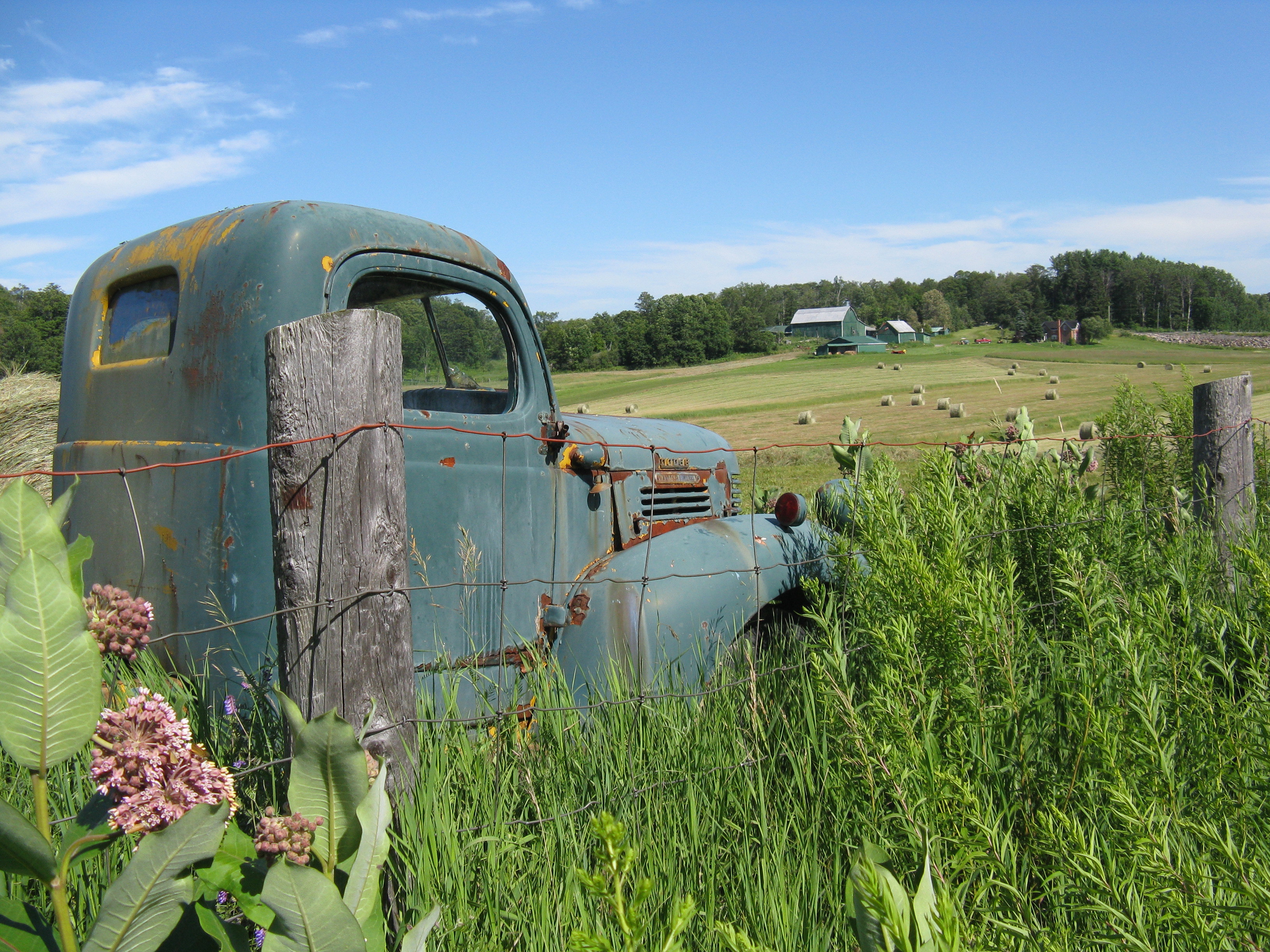
A rusted Dodge in a farmer's field near Bracebridge, Ont.
Categories
Auto racing Cars Indy Racing Touring Cars

This just in…

My latest story on the Canadian Touring Car Championship is in The Globe and Mail‘s Globe Drive section. The series is at the half-way mark and is a supporting event at this weekend’s Honda Indy Toronto.

Categories
Cars Safety Technology Transportation

All aboard the ‘road train’

A new European Union research project is giving new meaning to the term tailgating.

The SARTRE project is looking into what it dubs “road trains” or highway “platoons” – essentially groups of cars all heading to a common destination led by a vehicle driven by a professional driver with all the cars in the train linked and controlled by sophisticated navigation systems.

The goals of SARTRE – which stands for Safe Road Trains for the Environment – are to improve traffic flow on major highways, reduce fuel consumption and lower CO2 emissions.

The three-year project is being led by engineering firm Ricardo U.K. and is partly funded by the European Commission. Several other Europe-based companies are participating, including technology and R&D company Robotiker-Tecnalia Technology Centre of Spain, Volvo Technology Corp. (a business unit of Volvo Group, which makes trucks, buses and construction equipment) and Volvo Car Corp. The core concept was proposed by Ricardo and refined with other project members that are part of the European Automotive Research Partner Association (EARPA) safety task force.

“The goal is to encourage a step change in transport usage through the development and integration of technologies that will lead to road trains being operated on public highways without modification to the road infrastructure,” says Tom Robinson, SARTRE project co-ordinator with Ricardo U.K.

Robinson adds that car makers have long built active safety systems into their cars, such as antilock braking systems and traction control. But some have also developed more passive technology, at least from the driver’s perspective, that allows a car to nearly drive itself (think of the Lexus LS460 sedan that is capable of parallel parking on its own, with minimal input from the driver).

Starting in 2011, SARTRE will begin testing technology that will take over control of a car’s acceleration as well as braking and steering along with what Robinson calls an organizational assistant that will facilitate commands from a lead vehicle. Lead vehicles and those in the train will be tested on closed tracks in Sweden and Britain and possibly later on public highways.

While many of the specifics of road-train usage haven’t been worked out, Robinson presents what could be a typical scenario: drivers leave their homes to take part in their daily commute. Shortly after they enter the highway, they would meet up with six to eight other cars travelling in close formation.

Once the car communicates (through an Internet connection) with the lead vehicle, which is controlled by a full-time, professional driver and a price is agreed to, the driver would let go of the steering wheel and the car would join the train.

The driver could then relax – make phone calls or read a newspaper. To leave the train, the driver simply takes control of the car to make an exit.

“The goal is for drivers to be able to relax, but not fall asleep,” cautions Robinson. “There will always be a requirement for a driver to interact in some way during joining and exit manoeuvres.”

How a driver handles that interaction is still being studied, as is the optimum distance that cars should remain apart while they’re in a road train.

Robinson acknowledges that average drivers might need additional training to cope with road trains – as would the driver in the lead vehicle – but the benefits would be worth it.

He estimates there would be a 10 to 20 per cent improvement in fuel efficiency among vehicles that are in the train because the cars are closer to one another and reducing aerodynamic drag. They’d also be travelling at a constant speed while in the train. Robinson also believes the trains would make highways safer.

“Given that the driver is a major contributor to road fatalities and we are providing the option for drivers to reduce their control, then we could envisage a 10 per cent reduction in fatalities,” he said. “There is less variation in cruising speed and consequently more stability to traffic flow overall.”

Transportation expert Wendell Cox, principal of consulting firm Demographia of Belleville, Ill., has worked on a variety of transportation projects in Canada and the United States. He says the SARTRE project could have merit, but it should first prove that it’s “commercially viable” and that it’s something that drivers will actually want to take part in, and will feel there’s a pressing need for.

“It raises all sorts of issues,” he says. “The first is, Will it do what it says it’s going to do? And what’s the benefit for the (individual) driver? Are fuel savings enough?”

While one of SARTRE’s goals is to reduce fuel consumption among everyday motorists, Cox says fuel prices will have to rise much further than the near $1 a litre that most Canadians are paying to motivate people to use road trains.

“Fuel is really not that expensive and vehicle technology has improved so much that the miles per gallon average is 20 and in a Toyota Prius it’s 50,” adds Cox.

“The real issue is can we solve the problem of the train itself,” he says, adding that a more intriguing idea is that of GPS-controlled highways, or even specific highway lanes, that allow drivers to access them and then give up control of their cars to satellite technology, while remaining behind the wheel. “But we’re about 20 to 30 years away from that.”

“The technology exists (for GPS highways) but we have to surrender control of the car,” he says.

Published in The Globe and Mail’s Globe Drive on March 25, 2010

Categories
Cars

Bankruptcy for Chrysler?

The New York Times is reporting that the U.S. treasury department has begun the bankruptcy process for Chrysler. Workers could be protected and Fiat is still involved.

Categories
Cars Marketing

The Crowd-ed Car

Social Media Today reports that the Dutch Society for Nature and Environment, is thinking hard about the future of cars, and the car of the future. It, along with several technical universities, is asking people to contribute their ideas of what tomorrow’s cars should do, be and look like. It’s social media and crowdsourcing combined with automotive design. Chrysler and GM take note.